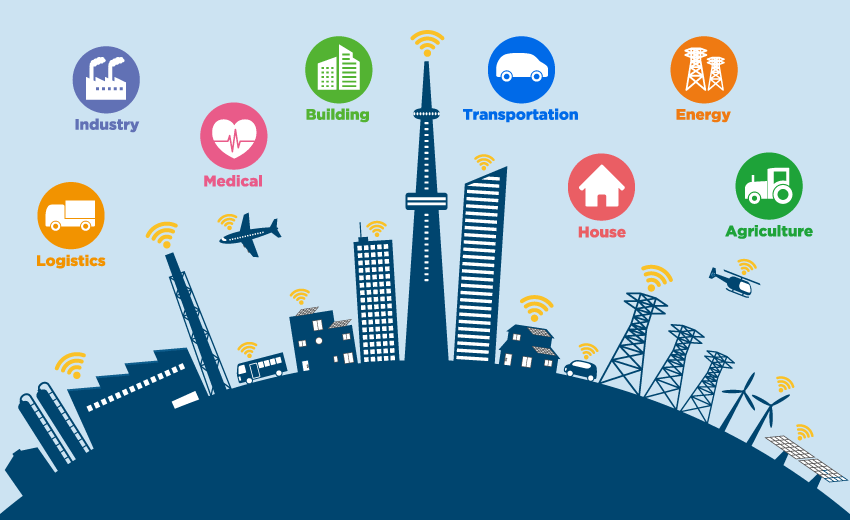
2025 tech trends marked a turning point for smart cities, IoT platforms, and digital transformation initiatives worldwide. Throughout the year, technology moved beyond experimentation and into real, measurable impact. As a result, cities, industries, and governments focused more on scalability, resilience, and data-driven decision-making.
At MTi Arabia, we closely followed how these trends evolved in real projects. Looking back, five technology trends stood out for their maturity, adoption, and value creation. More importantly, they revealed what truly works when technology meets real-world complexity.
1. IoT Platforms Shifted from Connectivity to Intelligence
In 2025, IoT platforms evolved significantly. Instead of acting only as connectivity layers, they became intelligence engines.
From device management to actionable insights
Previously, many IoT deployments focused on connecting devices and collecting data. However, organizations quickly realized that raw data alone creates limited value. Therefore, platforms increasingly integrated analytics, rule engines, and automation tools.
As a result, smart cities could detect anomalies faster, predict maintenance needs, and optimize public services in real time. Moreover, unified dashboards allowed decision-makers to act with confidence rather than intuition.
2. Smart Cities Prioritized Integration over Expansion
While early smart city projects often expanded sensor networks, 2025 showed a different priority.
Interoperability became essential
Cities learned that adding more technology does not automatically improve outcomes. Instead, integrating existing systems delivered stronger results. Consequently, open standards, APIs, and interoperable platforms became essential components.
Because of this shift, municipalities could connect lighting, mobility, environment, and energy systems into a single operational view. Meanwhile, integration reduced operational silos and improved long-term sustainability.
3. Edge Computing Gained Momentum Across Urban and Industrial Use Cases
One of the most practical 2025 tech trends was the rise of edge computing.
Faster decisions closer to the source
Cloud computing remained critical. However, latency-sensitive use cases demanded local processing. Therefore, edge computing moved data processing closer to sensors and machines.
As a result, cities improved response times for traffic management, environmental monitoring, and public safety. Additionally, industries benefited from reduced bandwidth costs and increased system reliability. This balance between edge and cloud proved crucial for scalable IoT architectures.
4. Cybersecurity Became a Core Design Principle
Security discussions changed significantly in 2025. Instead of being an afterthought, cybersecurity became a foundation.
Security by design, not by reaction
With IoT deployments growing in scale, attack surfaces expanded rapidly. Therefore, organizations embedded security at every layer, from devices to platforms and applications.
Encryption, access control, and continuous monitoring became standard practices. Moreover, compliance requirements pushed cities and enterprises to adopt proactive security frameworks. As a result, trust emerged as a key success factor for digital transformation projects.
5. Data-Driven Decision-Making Reached Operational Maturity
Data has always been central to digital projects. However, 2025 showed a clear evolution.
From dashboards to strategic intelligence
Instead of static dashboards, organizations demanded predictive insights and performance indicators aligned with policy and business goals. Consequently, business intelligence tools became tightly connected to IoT platforms.
Smart cities used data to prioritize investments, improve citizen services, and measure impact transparently. Meanwhile, industries leveraged analytics to increase efficiency and reduce downtime. Ultimately, data turned into a strategic asset rather than a reporting tool.
2025 Tech Trends Key Lessons
Looking back, several lessons stand out clearly. First, technology delivers value only when aligned with real operational needs. Second, integration consistently outperformed isolated innovation. Third, scalability and security proved just as important as functionality.
For Mingothings International, these insights reinforced a clear direction. Successful digital transformation depends on strong ecosystems, reliable platforms, and long-term vision. As we move forward, these lessons will continue to shape how smart cities and industries adopt technology responsibly.
Looking Ahead Beyond 2025 Tech Trends
While this recap focuses on what we learned, the momentum continues. The foundations built in 2025 now enable more ambitious projects. Therefore, future innovation will rely less on experimentation and more on execution at scale.
By applying the lessons from these 2025 tech trends, organizations can build smarter, safer, and more resilient systems. Ultimately, technology succeeds when it improves lives, operations, and sustainability in measurable ways.
MTi Arabia is committed to empowering cities with secure, scalable, and smart infrastructure. As threats evolve, so must our defenses.
Contact our team to explore how we can help you build safer smart city environments.